About Me

I am a writer and journalist specialising in the history and science of infectious disease. A regular contributor to The Observer and The Lancet, my books include a global history of malaria and a social history of the 1918 influenza pandemic, Living With Enza, which was nominated for the Royal Society Science Book of the Year in 2009.
In May 2019, six months before the novel coronavirus SARS-CoV-2 emerged in China, I published The Pandemic Century: 100 Years of Panic, Hysteria and Hubris, explaining why, despite more than a century of medical progress, pandemics continue to take us by surprise, spreading fear and conspiracy theories.
As well as writing for popular audiences, I am a medical historian and have been published in Medical History, Social History of Medicine, and the History and Philosophy of the Life Sciences.
Prior to becoming a full-time writer and researcher, I enjoyed a long career as an investigative reporter and feature writer at newspapers including the Evening Standard, The Independent on Sunday, The Observer and The Guardian. In 1996 my Channel 4 Dispatches exposé of the British intelligence services' involvement in re-arming the Argentine Navy after the Falklands War was shortlisted for the best current affairs documentary at the Royal Television Society Awards.
I write at Going Viral and am an honorary fellow at UCL's Institute of Global Health.
Get in touch →Books
"The good historian is like the giant of the fairy tale… wherever he catches the scent of human flesh, there his quarry lies."
— Marc Bloch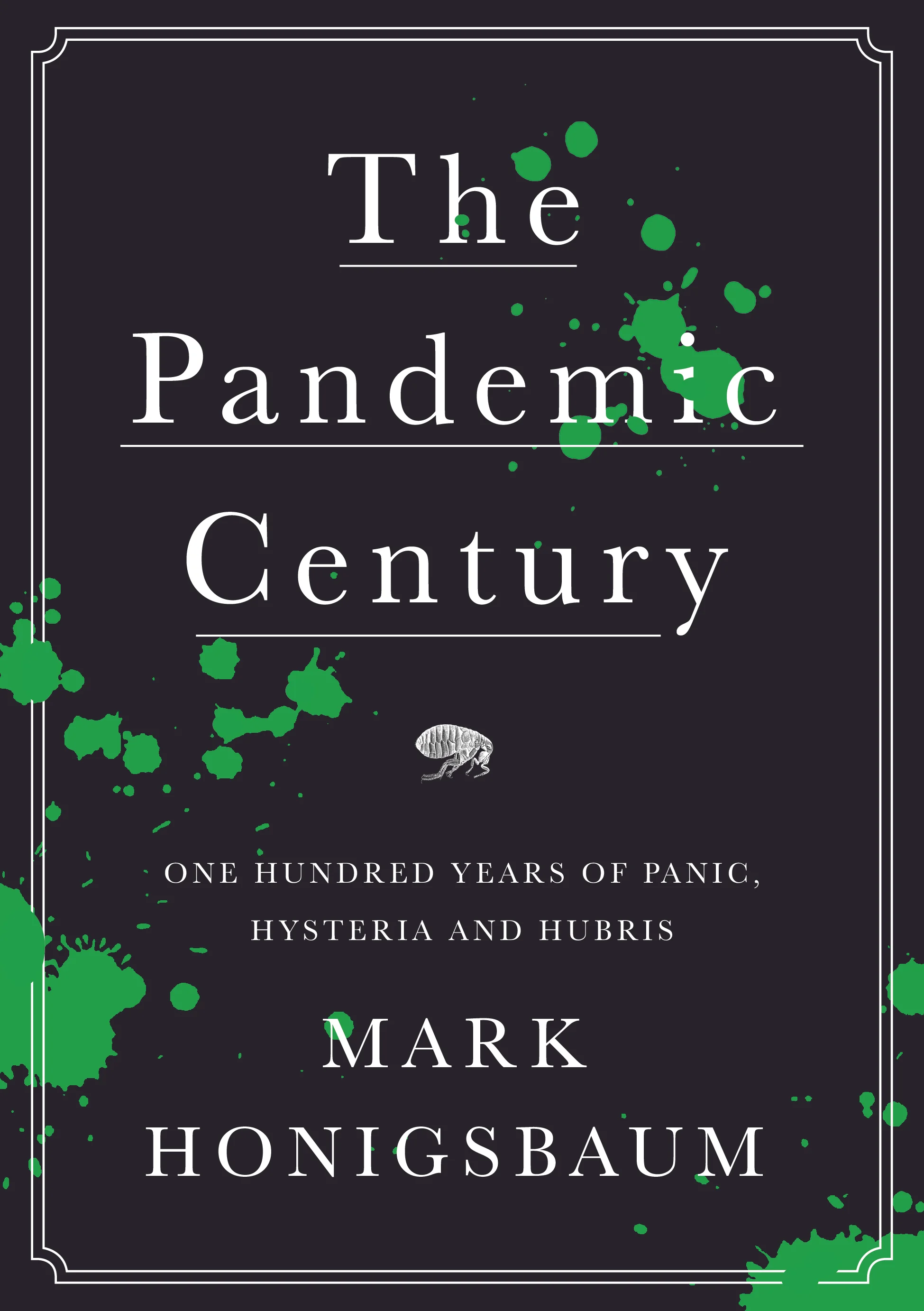
Ever since the 1918 Spanish influenza pandemic, scientists have dreamed of preventing catastrophic outbreaks of infectious disease. Yet, despite a century of medical progress, viral and bacterial disasters continue to take us by surprise, inciting panic and dominating news cycles. Named one of the best books of the year in "Health" by the Financial Times and an "Editor's Choice" by the New York Times.
US edition (Norton) → UK edition (Penguin) →
Influenza was the great killer of the nineteenth and twentieth centuries. The so-called 'Russian influenza' epidemic killed about 1 million people across Europe in 1889–93. The Spanish flu of 1918, meanwhile, would kill 50 million people — nearly three percent of the world's population.
Learn more →
Between the summer of 1918 and the spring of 1919 a deadly strain of influenza claimed the lives of 228,000 Britons. Worldwide the death toll from 'Spanish' influenza was simply unimaginable — between 50 million and 100 million dead.
Learn more →
Malaria is a deadly parasitical infection with a vicious ability to mutate. This book retraces the extraordinary quest for quinine — the only cure before the twentieth century — through the Andes and the story of a miraculous tree that changed medicine forever.
Learn more →
In 1887, two British sailors set off across the Andes on a secret mission: to locate an immense hoard of Inca gold lost for hundreds of years in a remote mountain range above the Amazon. An adventure story that is also a meditation on obsession, myth, and the lure of lost worlds.
Learn more →Essays
It is deeply troubling that the USA's new health secretary believes in conspiracy theories and is hostile towards modern medicine.
Few events are as compelling as an epidemic. When sufficiently severe, an epidemic evokes responses from every sector of society, laying bare social and economic fault lines and presenting politicians with fraught medical and moral choices.
Understanding the battle over immunization — from the pre-Victorian era onward — between public health and the people may help in treating anti-vax sentiment.
How can we commemorate grief on the scale of Covid-19? A year into the pandemic, the coronavirus has left a void in all our communities — a vacuum that cries out to be filled.
In the 1720s, Cotton Mather supported an early form of inoculation; Washington, Jefferson and Adams followed suit.
The Spanish influenza virus — or at least its viral offspring — have been circulating for 100 years, but it is only in recent years that histories of the pandemic have achieved a similar ubiquity in our culture.
Ebola seems to draw on a familiar store of images and metaphors — of parasites and hot zones, desperate patients, and intrepid disease detectives. But which earlier epidemics does it echo, and what can the parallels tell us?
Around the world, vaccines are in retreat, shunned by populations who have never been exposed to the diseases that blighted their grandparents’ generation — yet vaccines have saved more lives than almost any other intervention in medical history.
While wars are endlessly memorialised in the West, the non-narrative and morally complex nature of a pandemic mean it is rare to come across a memorial to its victims, much less a monument recalling the heroism of health workers.
An exploration of how epidemic disease is imagined in popular culture — from Rise of the Planet of the Apes to our deepest fears about pandemic spread across a connected world.
Academic Articles
Journalism
Going Viral
Going Viral
The history, science and culture of infectious disease — plus a little politics and poetry. A reader-supported Substack publication by Mark Honigsbaum.
Subscribe on Substack →